
What it is: A collection of "red, white and blue" images to celebrate the 250th birthday of the United States.
Where it is: Between 11,000 light-years and 19 million light-years from Earth
When it was shared: June 30, 2026.
NASA has marked the 250th birthday of the U.S. with a striking new collection of cosmic images from its Chandra X-ray Observatory, presenting four deep-space objects in red, white and blue.
The image set combines X-ray data from Chandra — which has been orbiting Earth since 1999 — with observations from NASA’s Hubble and James Webb Space Telescopes (JWST), as well as multiple ground-based observatories. Together, the images showcase some of the universe’s most dramatic environments, from the remains of an exploded star to a massive galaxy cluster shaped by dark matter — each rendered in patriotic colors.
Arguably the image most reminiscent of Fourth of July fireworks is that of Cassiopeia A, a famous supernova remnant about 11,000 light-years away in the constellation Cassiopeia (top left). Chandra’s X-ray data, shown in blue and purple, reveal the blast wave from a massive stellar explosion and trace elements such as iron, calcium and oxygen. Meanwhile, infrared data from JWST has been overlaid in red and white, highlighting the expanding shell of debris and cosmic dust. It’s all the result of a massive star that exploded about 340 years ago, according to NASA.
On the top-right is NGC 3603, a giant nebula 20,000 light-years away in the Carina spiral arm of the Milky Way. Here it appears as a glowing field of highly active, newly formed stars. Chandra’s X-ray observations reveal the light coming from the nebula, while Hubble data in optical, infrared and ultraviolet light show its glittering array of stars, as well as dust and gas. NGC 3603 is the largest nebula seen in visible light in our galaxy.
NGC 4736, also known as M94, is something else entirely. Pictured bottom-right, it’s a spiral galaxy about 19 million light-years from Earth in the constellation Canes Venatici. Its famed for the faint arms outside of its oval-shaped core region — known as a "starburst ring," where new stars are forming. It’s shown here with Chandra’s X-ray data layered with visible-light imagery captured by ground-based astrophotographers.
The final image features ZwCl 0024+1652 (bottom-left), a distant galaxy cluster where Hubble data has helped astronomers infer the presence of dark matter. About five billion light-years away in the constellation Pisces, Chandra’s X-rays reveal a vast reservoir of superheated gas in ZwCl 0024+1652 — shown in red — that contains more mass than the cluster’s galaxies combined.
The release of the new photos also includes novel sonifications for NGC 3603, NGC 4736 and ZwCl 0024+1652, transforming astronomical data into sound. The project allows audiences to experience space through both sight and hearing.
See more space photos of the week:
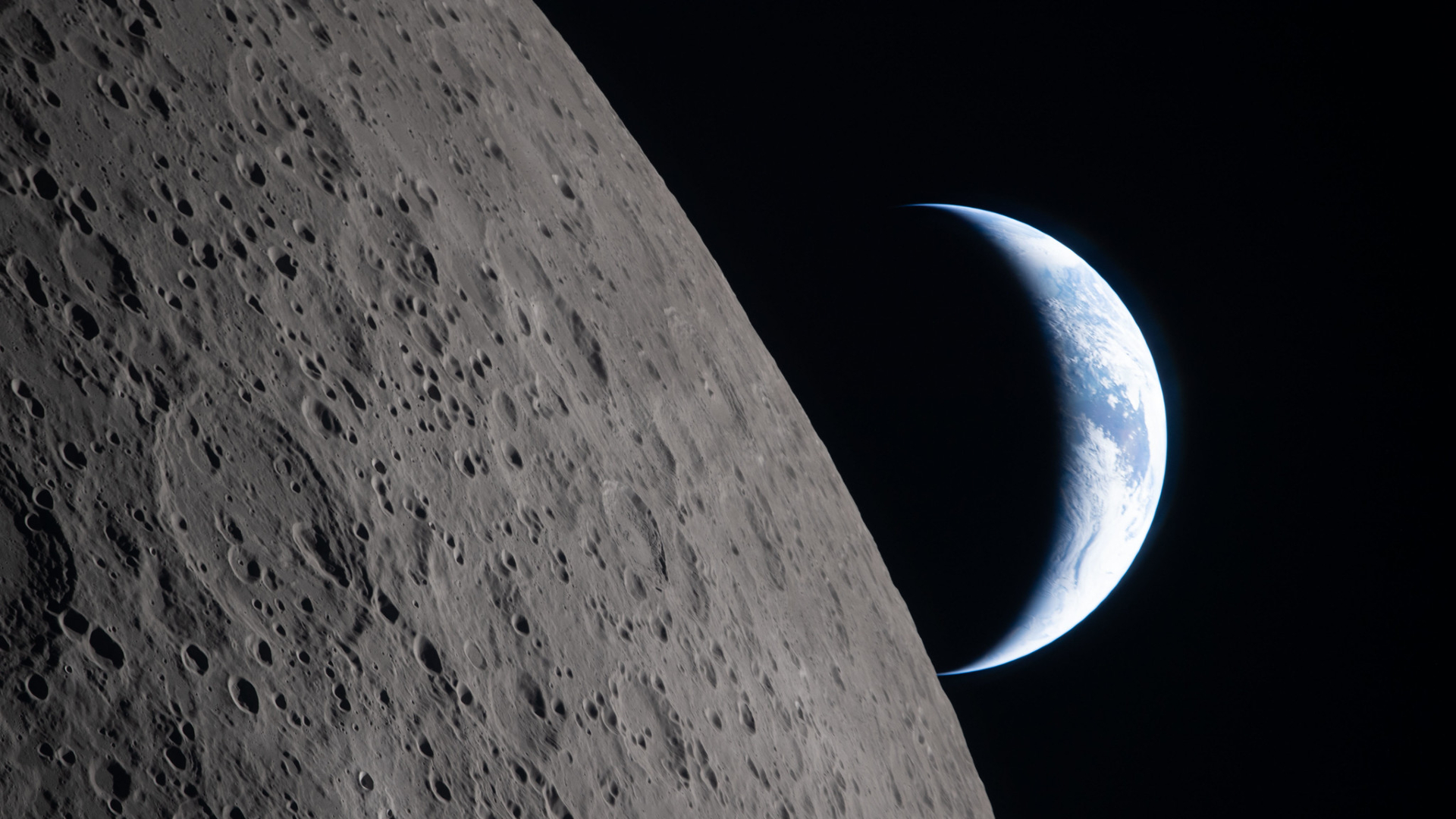 'Human minds should not go through this'
The Artemis II crew recalls the unreal moment when Earth disappeared
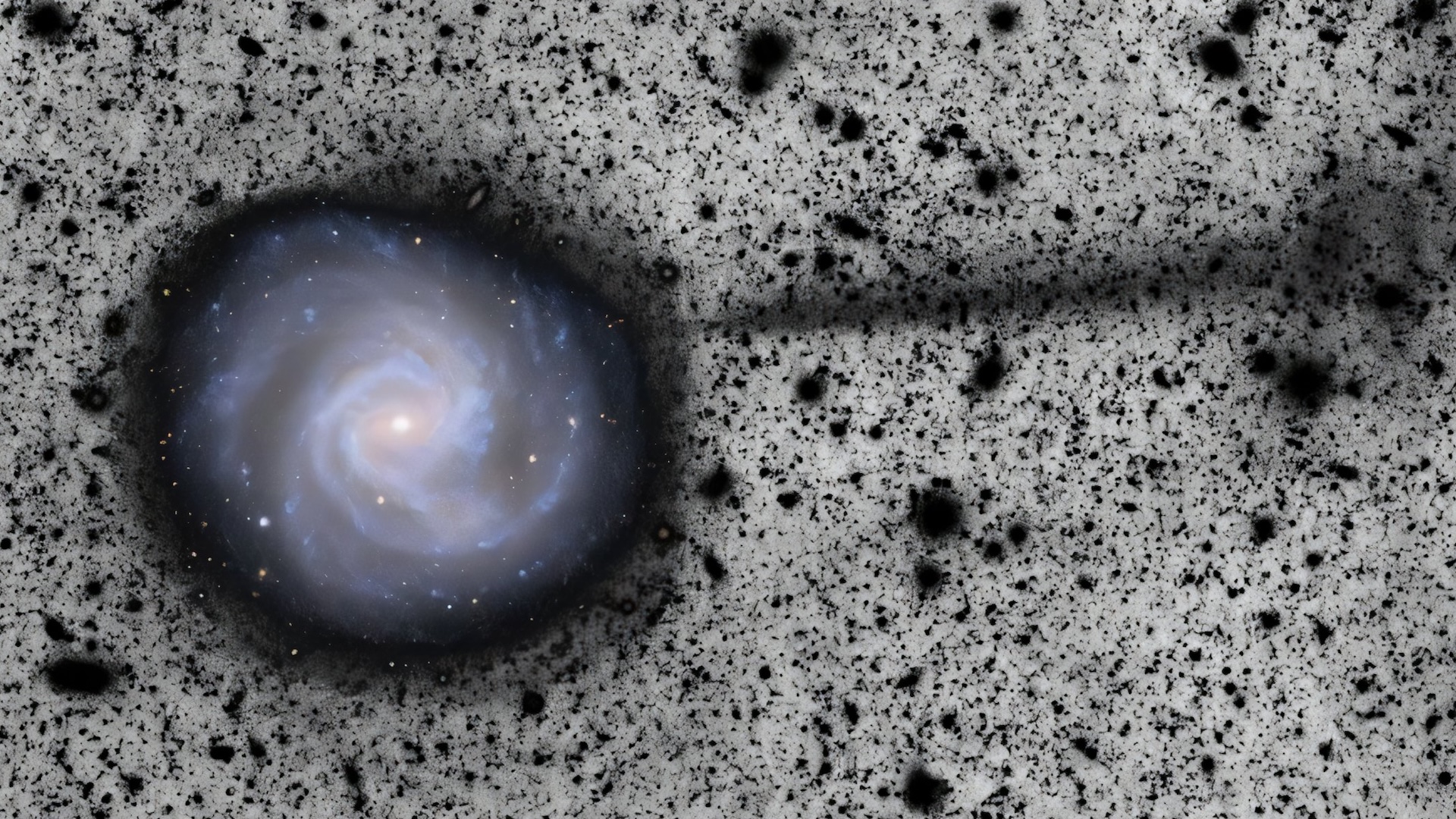 Hidden structure in 1st Vera Rubin image
First-light images from the Vera C. Rubin Observatory reveal a 163,000-light-year stream of stars emanating from a nearby galaxy.
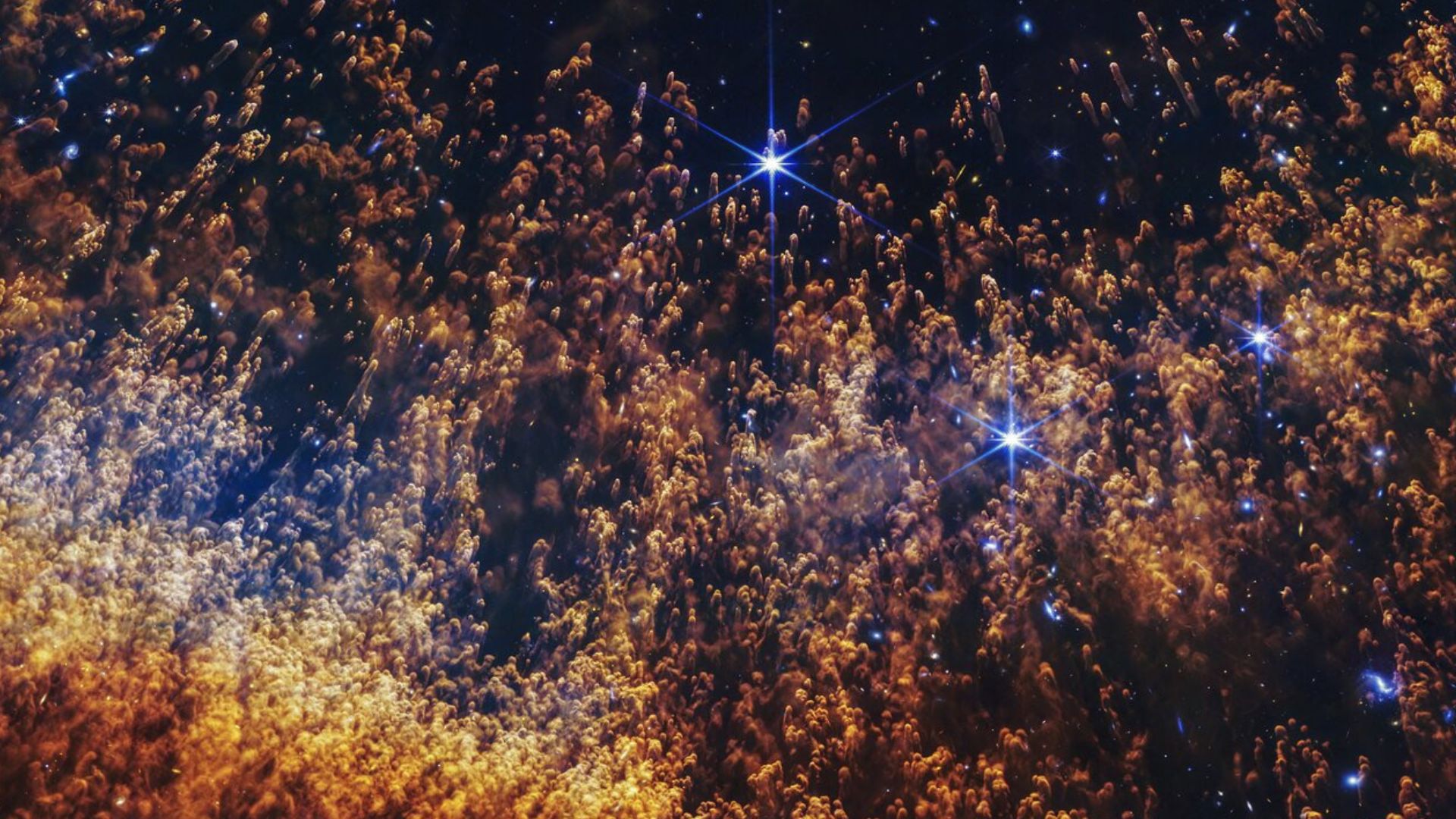 JWST peeps the 'Eye of God'
A spectacular James Webb telescope image reveals intricate structures inside the Helix Nebula.
from Latest from Live Science https://ift.tt/L8MiFHZ
via IFTTT